Types of dumbbells
| Type |
Best for |
Things to know |
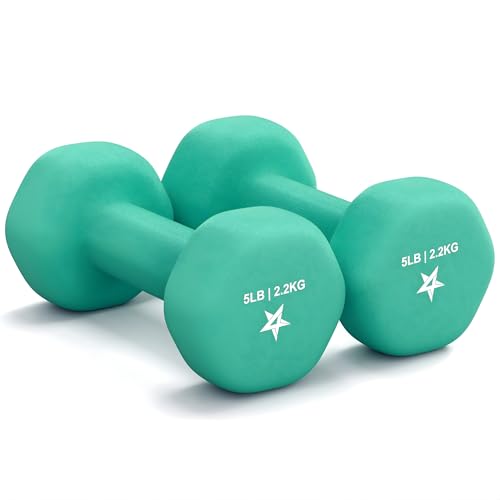
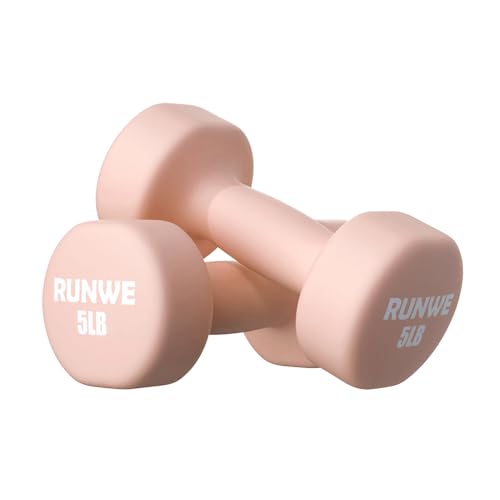
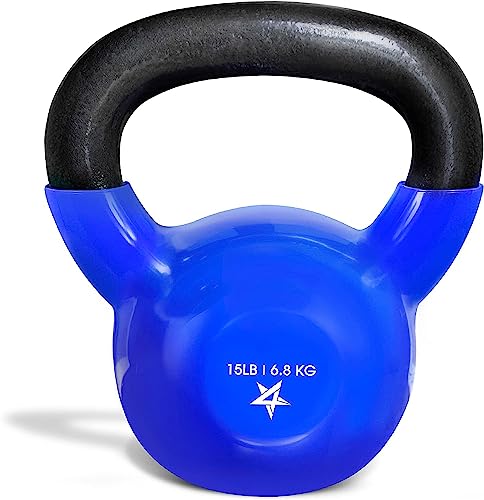
| Neoprene or vinyl |
Light work, beginners, rehab-style exercises |
Usually light weights only; easy to grip |
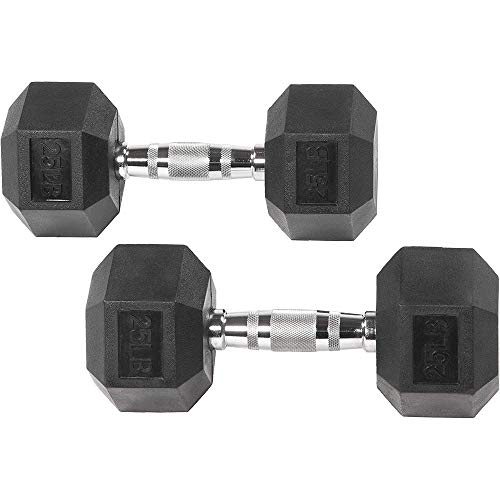
| Rubber hex |
Most home training |
Don't roll; durable; a full set needs a rack and space |
| Adjustable (dial or selector) |
Small spaces, progressive training |
One pair replaces many; bulkier handles; must not be dropped |
| Plate-loaded (spin-lock) |
Budget, heavier loads |
Changing plates takes time; collars must be tight |
Comparing adjustable models? Read Best Adjustable Dumbbells for Home: Dial vs Pin vs Plate.
What to check before you buy
- Weight range. Pick a range that covers both your lightest exercises (lateral raises, curls) and your heaviest (rows, squats, presses), with room to progress.
- Increments. Smaller jumps make it easier to progress steadily. Some adjustable sets jump 5 lb or more at a time.
- Handle and shape. Check grip diameter and knurling. Long adjustable dumbbells can get in the way on some exercises.
- Footprint and storage. A fixed set needs a rack; adjustable dumbbells sit in their trays. Measure the space you have.
- Durability. Adjustable dumbbells have moving parts; read owner feedback on the selector mechanism and never drop them.
- Price per pound. Compare the cost of a fixed set covering your range with one adjustable pair.
How to choose your starting weight
Choose a weight you can lift for 8 to 15 controlled reps while keeping good form, with a couple of reps left in reserve. Once that feels easy, add reps first, then weight. Our guide More Weight or More Reps? explains how to progress, and How to Build Muscle at Home gives a simple home program.
Safety and care
Train on a protected floor such as rubber or foam mats, keep clear space around you, and put dumbbells down rather than dropping them. Check collars and selector locks before each set, and store weights out of reach of children. See our home gym safety checklist.
Frequently asked questions
Adjustable or fixed dumbbells?
Adjustable dumbbells save space and money if you need a wide range of weights. Fixed dumbbells are faster to switch between and more durable, but a full set takes much more room.
What weights should a beginner buy?
It depends on your strength and exercises. A light pair for upper-body moves and a heavier pair for squats and rows is a common start; an adjustable pair covers both.
How are the dumbbells on this page rated?
Ratings are based on specifications, owner feedback and expert tests where available. See how we rate products.