A rowing machine works your legs, back, arms and core in one low-impact movement, which makes it one of the most complete cardio machines for home. Before you choose, compare the resistance type (it decides noise and feel), the machine's length, whether it stands upright or folds for storage, and whether the rail is long enough for your height.
Dept 01
Need help choosing?
Best Rowing Machines for Home
Read the guide ›
Rowing Machines
Air, magnetic, water and hydraulic rowers compared for home use
Product List
43 products · We may earn a commission from these links.
Our review


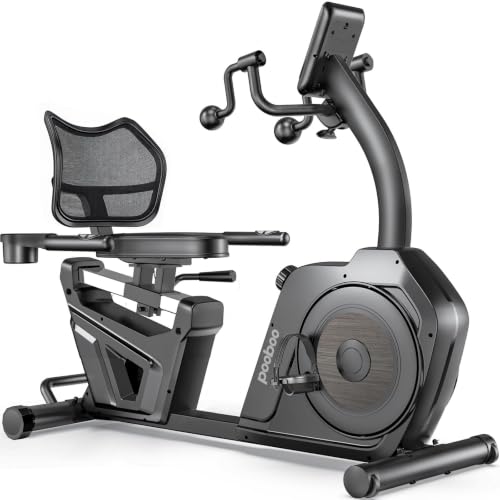




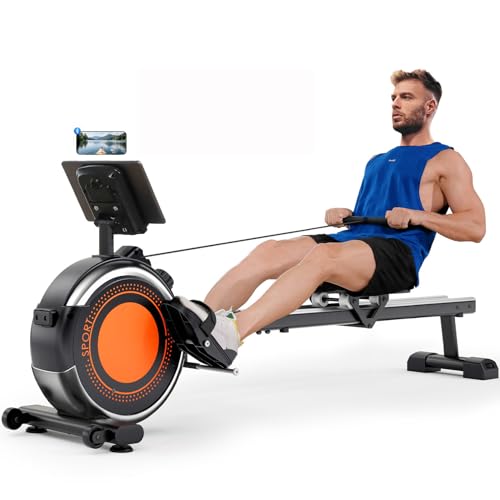
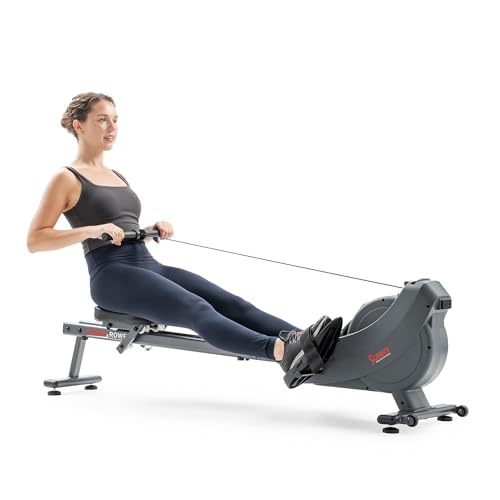


Types of rowing machines
| Resistance | Feel | Noise | Things to know |
|---|---|---|---|
| Air (fan) | Resistance rises the harder you pull | Loudest (fan noise) | Common in gyms and for training; often long and sturdy |
| Magnetic | Smooth, set by a dial or console | Quietest | Good for apartments and early workouts |
| Water | Paddle in a water tank, close to real rowing | Soft "whoosh" | Heavy; the water needs occasional treatment |
| Hydraulic (pistons) | Less natural stroke | Quiet | Cheapest and most compact; often lighter-duty |
What to check before you buy
- Length and storage. Full-size rowers are long. Measure the space for use and check whether the model stands upright or folds. Our Home Gym Footprint Report lists real dimensions.
- Rail length and user height. Taller users need a rail long enough for full leg extension. Check the maximum user height or inseam in the listing.
- Weight capacity and frame. Choose a user limit comfortably above your weight; aluminum or heavier steel frames flex less.
- Seat and footrests. A comfortable seat height and adjustable footrests with good straps make longer sessions easier. Higher seats are easier to get on and off.
- Monitor. Look for a display that shows time, distance, stroke rate and split time (time per 500 m) so you can track progress.
- Noise. If you live with others or in an apartment, a magnetic or water rower is usually the safer choice.
For a detailed comparison, read Best Rowing Machines for Home: Air, Water and Magnetic Rowers.
Technique first
Good form matters more than speed. Each stroke starts with the legs, then the body swings back, then the arms pull; on the way back the order reverses. Most of the power should come from the legs, not the arms. Start with short, steady sessions and add time before adding intensity. If you have back pain, check with a healthcare professional before rowing.
Setup and care
Place the rower on a flat, protected surface such as an exercise mat, with room at both ends. Wipe the seat rail regularly so the seat rolls smoothly, check the strap or chain and bolts, and treat the water in a water rower as the manufacturer recommends.
Frequently asked questions
Which type of rower is quietest?
Magnetic rowers are usually the quietest, followed by water rowers. Air rowers get louder as you pull harder.
Is a rowing machine good for a small apartment?
It can be, if it stores upright or folds. Check the stored dimensions and choose a magnetic or water model to limit noise.
Is rowing good for weight loss?
Rowing uses many muscles at once and can be done hard or gently, so it fits well in a regular exercise routine. Results depend on how often and how long you train, along with diet.
How are the rowers on this site rated?
Ratings are based on specifications, owner feedback and expert tests where available. See how we rate products.