
Updated October 2026
Strength training makes everyday tasks easier, helps protect bone and muscle as you age, and is linked to better management of several chronic conditions. Health agencies treat it as essential, not optional: the CDC and the WHO both recommend muscle-strengthening activities that work all major muscle groups on at least 2 days a week, in addition to aerobic activity. The good news is that you can meet that target at home with bodyweight moves, resistance bands or a pair of dumbbells.
HomeGymUSA may earn a commission when you buy through links on this page, at no extra cost to you. Products are selected from manufacturer specifications; we have not tested them in person.
What the guidelines actually say
For adults, the CDC recommends at least 150 minutes a week of moderate-intensity aerobic activity plus muscle-strengthening activity on 2 or more days a week that works the legs, hips, back, abdomen, chest, shoulders and arms. The WHO gives the same strength recommendation and adds that older adults should also do varied activities that emphasize balance and strength on 3 or more days a week to help prevent falls.

In practice, "muscle-strengthening" means working a muscle until it is hard to do another repetition with good form. That can be:
- Bodyweight exercises such as squats, push-ups (on the wall, a counter or the floor), lunges and glute bridges
- Resistance bands for rows, presses and leg work
- Dumbbells, kettlebells or a barbell
- Heavy gardening or carrying loads, as long as it genuinely challenges the muscles
The main benefits of strength training
1. Stronger muscles for daily life
Carrying groceries, climbing stairs, getting up from the floor and lifting a child all depend on muscular strength. Adults gradually lose muscle mass with age if they do not use it, and the Mayo Clinic notes that strength training helps preserve and increase muscle mass at any age. Stronger legs and hips also make it easier to stay independent later in life.
2. Bone health
Loading your bones through resistance exercise stresses them in a way that can help maintain bone density. The Mayo Clinic lists increased bone density and a reduced risk of osteoporosis among the benefits of strength training. If you already have osteoporosis, ask your doctor or a physical therapist which movements are safe, because some spinal flexion and twisting exercises may need to be avoided.
3. Weight management and metabolic health
Strength training helps you keep or build muscle, and it is part of an overall pattern of activity that supports weight management. It is not a shortcut, though: the size of the "extra calories burned by muscle" effect is modest, and diet still matters most for body weight. What strength work does reliably is help you keep muscle while you lose fat, which is why it is usually recommended alongside a calorie-controlled diet rather than instead of one. Regular physical activity is also associated with better blood sugar control, according to the CDC.
4. Balance, posture and fall prevention
Strong hip, leg and core muscles help you react when you trip and keep good posture when you sit or stand for long periods. For older adults, the WHO specifically recommends combining balance and strength training to reduce the risk of falls.
5. Managing chronic conditions
The Mayo Clinic says strength training can reduce the signs and symptoms of many chronic conditions, including arthritis, back pain, obesity, heart disease, depression and diabetes. "Reduce symptoms" is the key phrase: it is a helpful part of care, not a cure, and you should follow the plan agreed with your doctor.
6. Mood, sleep and thinking skills
Regular physical activity, including strength training, is linked to lower risk of depression and anxiety and to better sleep, according to the CDC. Many people also find that seeing measurable progress, such as adding reps or moving to a heavier dumbbell, is a strong motivator in itself.
How to start at home: a simple 2-day plan
Do this full-body routine on 2 non-consecutive days a week (for example, Monday and Thursday). Choose a version of each exercise that leaves you with about 2 repetitions in reserve at the end of each set.
| Exercise | Muscles | Sets x reps | Easier / harder option |
|---|---|---|---|
| Squat (to a chair) | Thighs, glutes | 2-3 x 8-12 | Sit to a higher chair / hold a dumbbell at the chest |
| Push-up | Chest, shoulders, triceps | 2-3 x 8-12 | Hands on a wall or counter / feet on the floor |
| Band or dumbbell row | Upper back, biceps | 2-3 x 10-12 | Lighter band / heavier dumbbell |
| Glute bridge | Glutes, hamstrings | 2-3 x 10-15 | Both legs / single leg |
| Overhead press | Shoulders, triceps | 2 x 8-12 | Seated with light weights / standing |
| Dead bug or plank | Abdominals, core | 2 x 20-30 seconds | Knees down / longer hold |
When you can complete the top of the rep range on every set with good form, make the exercise a little harder: add a few pounds, a stiffer band or one more set. That gradual increase, called progressive overload, is what keeps the benefits coming. Our guide to creating a fitness plan shows how to fit strength days around cardio.
Equipment that makes home strength training easier
You can start with no equipment at all, but a few pieces make progression much simpler:
- Resistance bands: cheap, quiet and good for rows and presses. The Zacro 6-band set spans 15 to 170 lb and includes a door anchor, and the LEEKEY loop bands (8 to 85 lb) can also assist pull-ups.
- Light dumbbells for beginners: the BalanceFrom neoprene set includes 3, 5 and 8 lb pairs with a stand, useful for shoulder and arm work or for older beginners.
- Adjustable dumbbells: a pair like the 5-25 lb adjustable set replaces five pairs of fixed weights and leaves room to progress.
- A bench: an adjustable bench such as the FLYBIRD adjustable bench (ASTM-certified to 800 lb) adds incline presses, supported rows and step-ups. See our adjustable weight bench buying guide for more options.
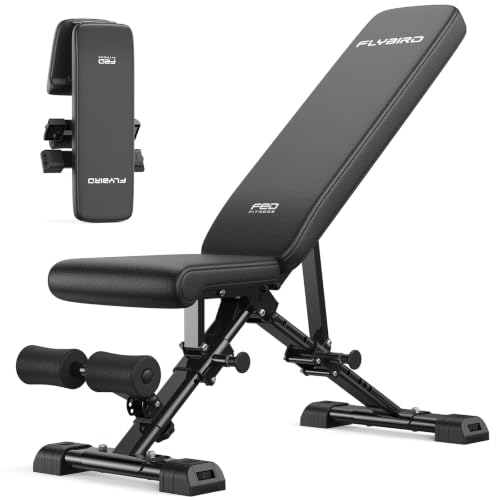
FLYBIRD FB800 Adjustable Weight Bench
A foldable adjustable bench that handles flat, incline, decline and upright positions for workouts at home.
Product information
Our review: 4.5 out of 5
Product links

LEEKEY Resistance Bands Set for Home Workouts
A four-band kit with a carry bag that fits a suitcase, so your workouts can follow you anywhere you go.
Product information
Our review: 4.0 out of 5
Product links
Older adults choosing equipment may also find our guide on home fitness equipment for seniors useful.
Safety basics
- Warm up for 5 minutes with easy movement before lifting.
- Learn each movement with light resistance first; form comes before load.
- Breathe steadily. Exhale as you lift and avoid long breath-holding, especially if you have high blood pressure.
- Leave at least one rest day between hard sessions for the same muscle group.
- Stop if you feel sharp pain, chest pain, dizziness or unusual shortness of breath, and seek medical advice.
This article is for general information and is not medical advice. If you have a heart condition, high blood pressure, osteoporosis, joint problems, are pregnant, or are new to exercise, check with your doctor or a physical therapist before starting a strength program.
FAQ
How many days a week should I do strength training?
At least 2 days a week, working all major muscle groups, is the recommendation from both the CDC and WHO. Beginners do well with 2 full-body sessions on non-consecutive days; you can add a third once recovery feels easy.
Will strength training make me bulky?
Very unlikely with a typical home routine. Building a lot of muscle takes years of deliberate, high-volume training and eating in a calorie surplus. Most people simply look firmer and feel stronger.
Is strength training safe for older adults?
For most older adults, yes, and it is specifically recommended for maintaining strength, balance and independence. Start light, use a chair or counter for support when needed, and get medical clearance if you have a chronic condition.
Can I build strength without weights?
Yes. Bodyweight exercises and resistance bands count as muscle-strengthening activity. Weights simply make it easier to keep increasing the challenge as you get stronger.


